
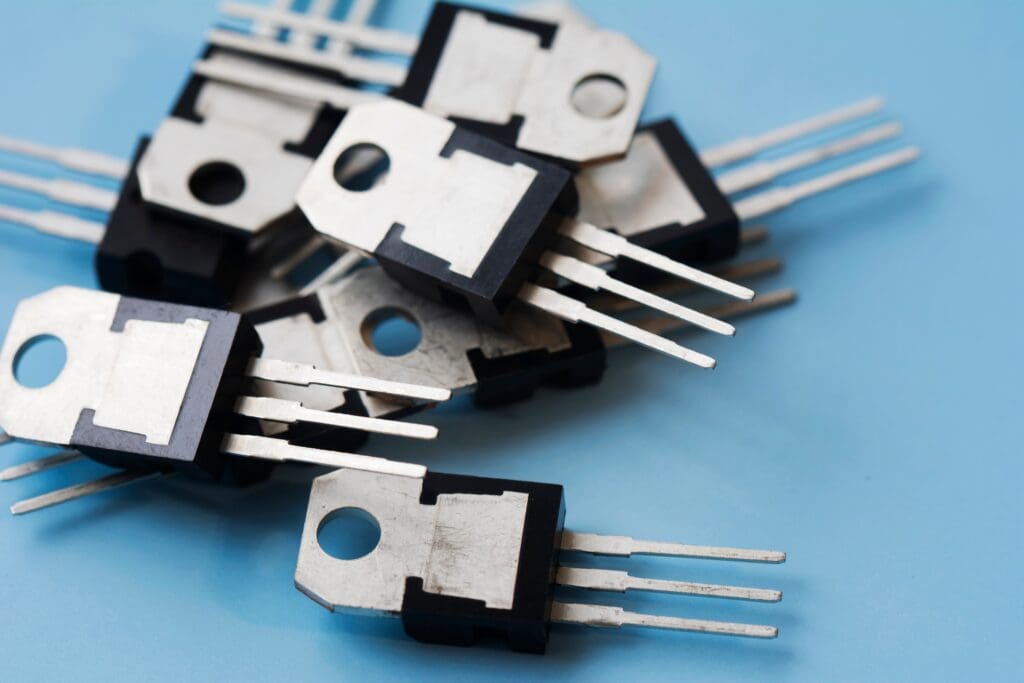
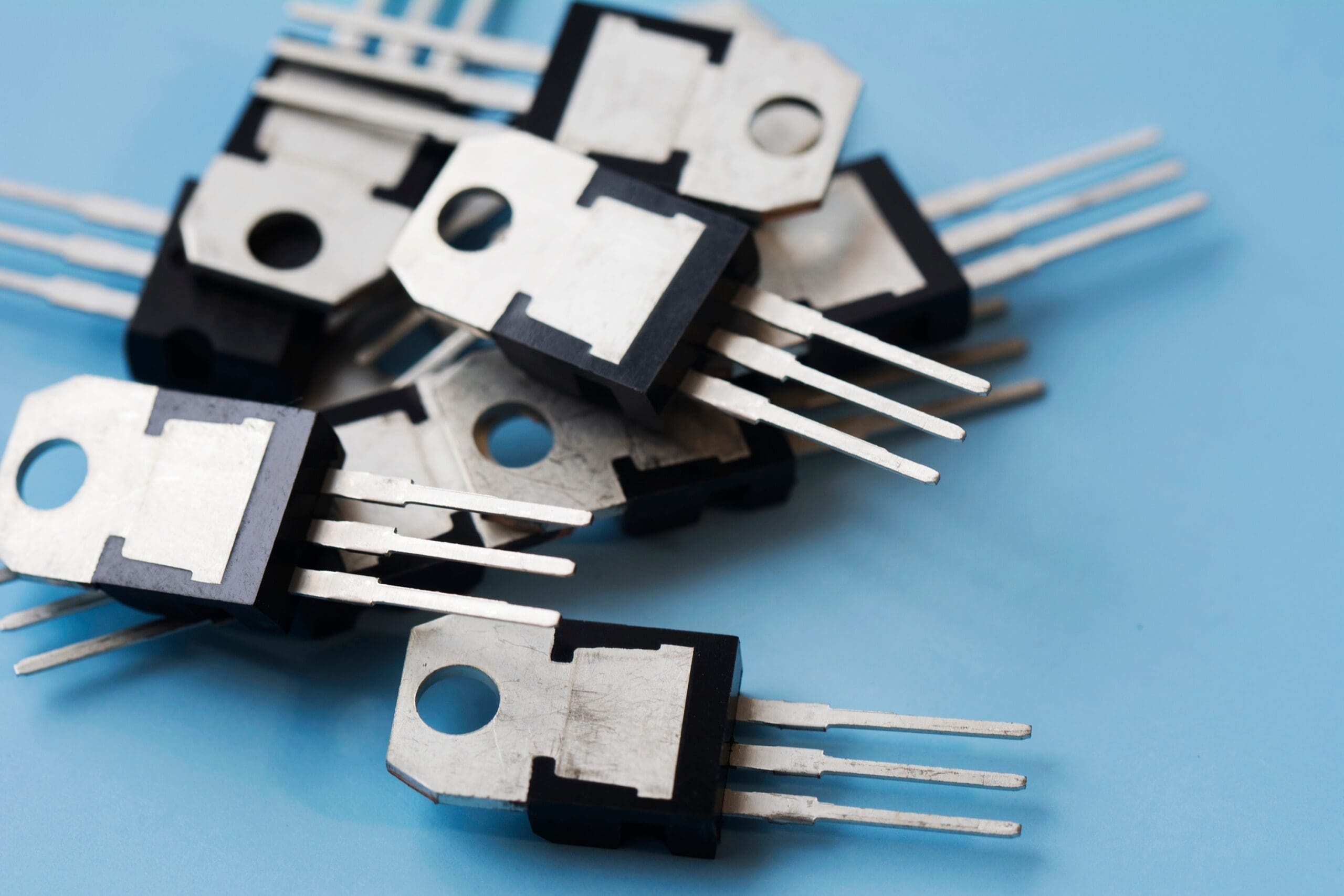
 Today it’s widely accepted one of the greatest — if not the greatest — inventions of the modern world is the transistor, and it’s well known that the defining demonstration of the transition took place Dec. 23, 1947. But this seismic shift in technology and humankind was kept a secret until June 30, 1948. Let’s take a closer look at this week’s Tech Time Warp.
In 1945, William Shockley returned from World War II to lead a solid-state physics group at Bell Labs. Shockley’s task was to develop a reliable replacement for the bulky vacuum tube, and on Dec. 16, 1947, researchers Walter H. Brattain and John Bardeen had a breakthrough. They built a crude amplifying transistor by applying two gold contacts to high-purity germanium. The contacts were close together and held in place by a plastic wedge. Working together, the contacts amplified an input signal up to 100 times. Shockley called their Dec. 23 demo of this breakthrough “a magnificent Christmas present.”
The Bell Labs team perfected their invention over the next year and gave only a week’s notice of the June 30, 1948, public demonstration for fear the government would shut it down as a matter of national security. The “open source” approach, however, ultimately benefited the world over. This transistor inspired Robert Noyce at Grinnell College, leading Noyce at Fairchild Semiconductor and Jack Kilby at Texas Instruments to develop even smaller integrated circuits made of silicon. As semiconductors got smaller and smaller, the possibilities for portable electronic grew larger and larger. (See Moore’s Law.)
For their efforts, Shockley, Brattain and Bardeen received the Nobel Prize in 1956.
Did you enjoy this installation of SmarterMSP’s Tech Time Warp? Check out others here.

Photo: Vlyaks / Shutterstock
This post originally appeared on Smarter MSP.