
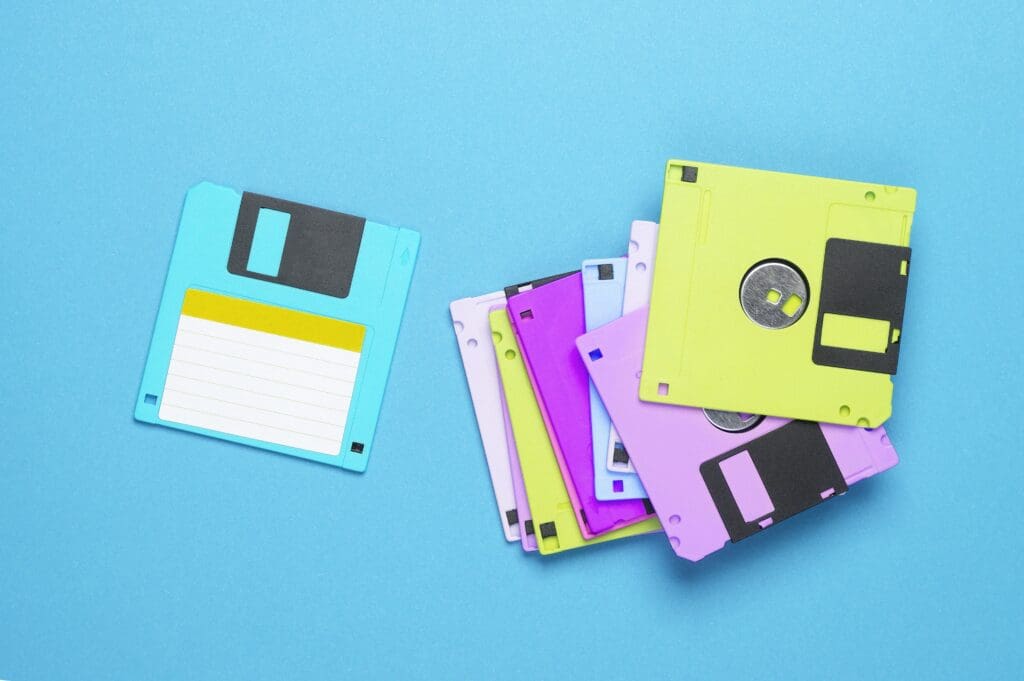
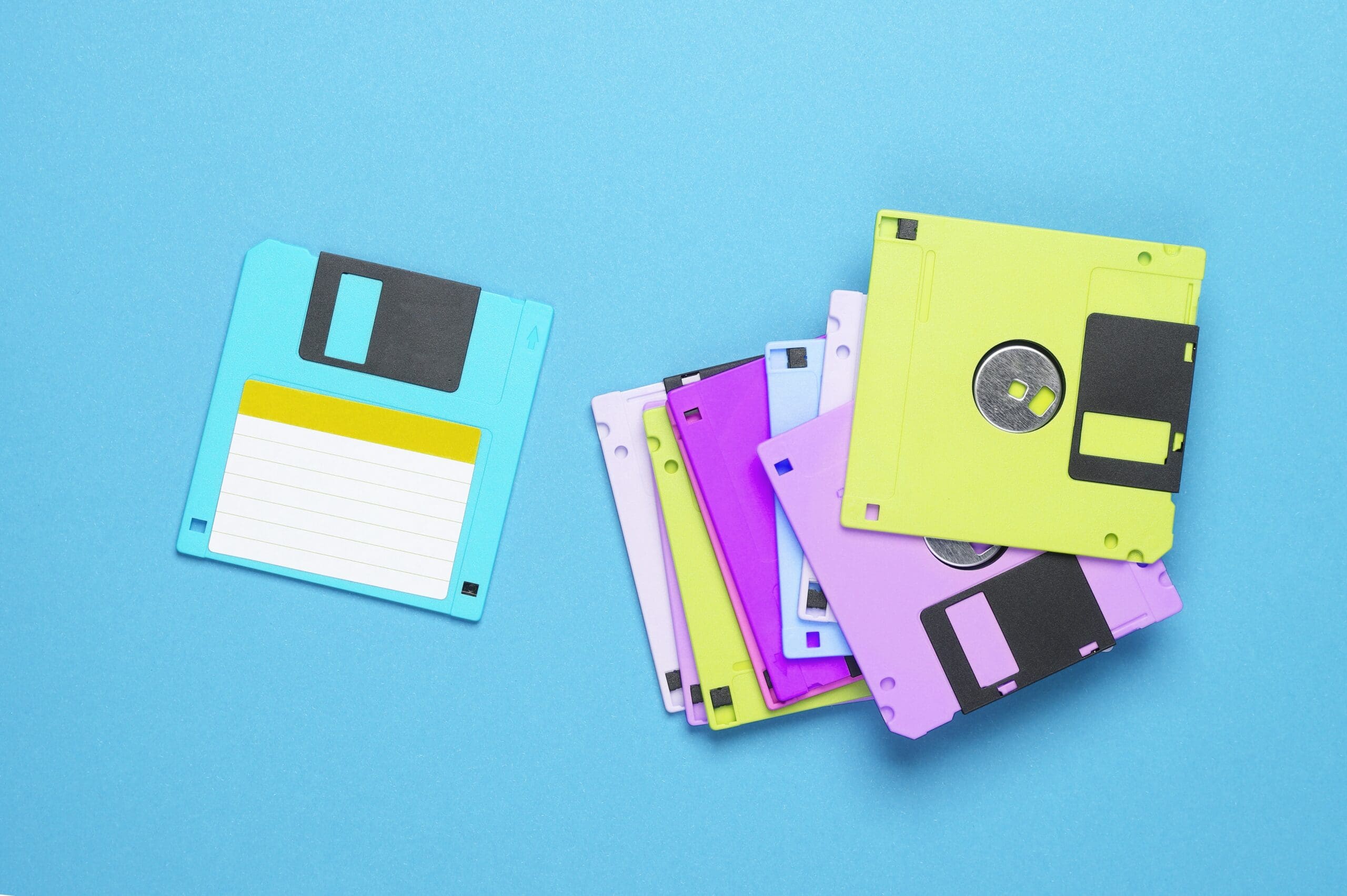
 The denizens of Gen Z and Gen Alpha may have never used floppy disks, and they may have never given much thought to what the “Save” icon represents. And, like the giant cell phones of the 1990s, the floppy disk has become a gag prop. However, it would be unwise to write off the importance of the floppy disk in technology history, as it made the software industry possible. Let’s take a closer look at this week’s Tech Time Warp.
The breakthrough that made software portable
In 1967, IBM engineers led by David Noble began tackling a problem: how to load instructions and software updates onto gargantuan mainframe computers. People were using punched cards, but a better, more portable solution was possible. The project, codenamed “Minnow,” resulted in a flexible disk drive that read 8-inch floppy disks offering an 80 KB storage capacity—the equivalent of approximately 3,000 punched cards (much easier to transport). The magnetic disk featured a circular hole in the center so it could spin. The team invented a special cleaning jacket in which to package the floppies for easy storage and portability—leading to the rise of “sneakernet,” or the physical movement of data from one machine to another.
Eight-inch floppies were still large, and the 1977 introduction of the Apple II brought with it the first 5.25-inch floppy drives. These were supplied by Shugart Associates, founded by Alan Shugart, the former IBM product manager who had assigned Noble to Project Minnow. Shugart Associates had introduced the “minifloppy” in 1976 as a lower-cost option for small business and personal computers.
But 5.25 inches was not “mini” enough. In 1982, the Microfloppy Industry Committee settled on a 3.5-inch disk based on a Sony design. The smaller disk featured a hard plastic case, so it wasn’t really “floppy,” but the name stuck.
In the mid-1990s, more than 5 billion floppy disks were sold annually—but then along came CD-ROMS, Zip drives, USB drives, and, ultimately, cloud storage. Yet the floppy lives on every time you click Save.
Did you enjoy this installation of SmarterMSP’s Tech Time Warp? Check out others here.

Photo: Vladimir Sukhachev / Shutterstock
This post originally appeared on Smarter MSP.